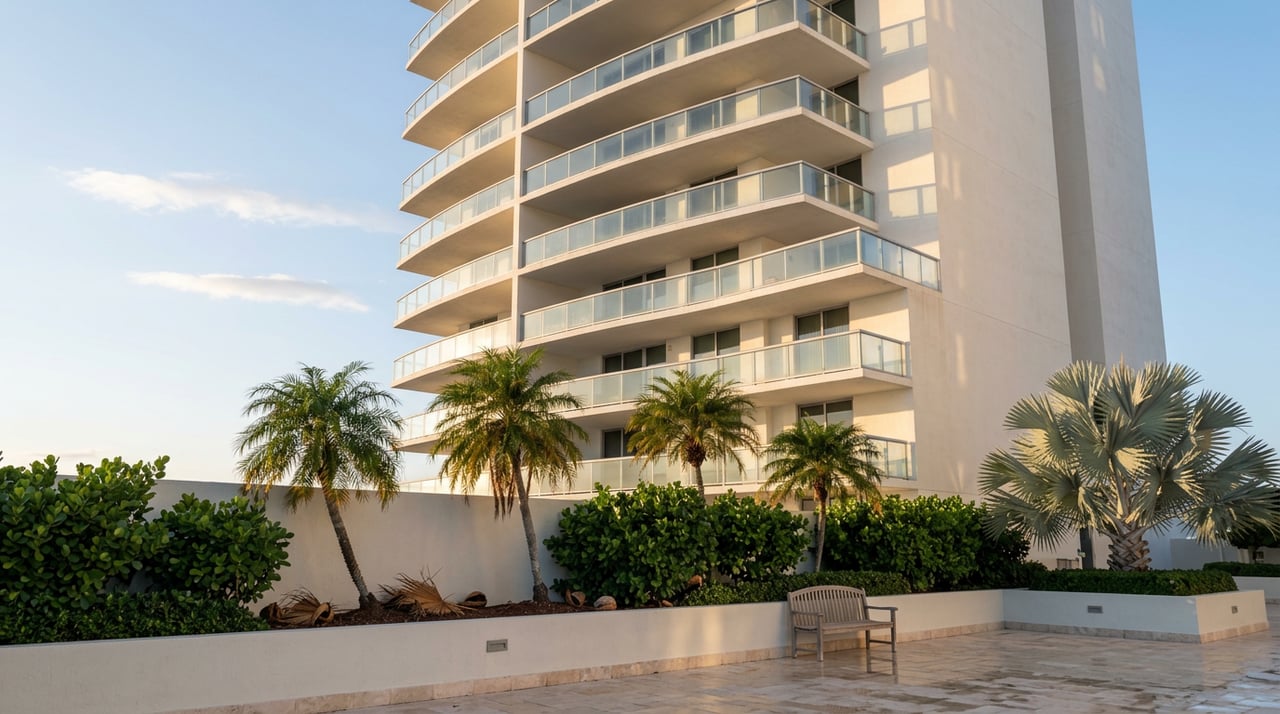
Pull up two two-bedroom listings in Mid-Beach right now. Same square footage, same walk to the sand, priced within a few dollars per square foot of each other. One building went up five years ago. The other went up in 1974. Nothing on either listing sheet tells you that the older one might come with a bill that costs more than the down payment on the newer one.
That gap is not a coincidence of timing. It is the direct result of a Florida law finishing a multi-year phase-in this year, and it has quietly split Miami Beach's condo inventory into two markets that behave nothing alike, even when the price tags look identical.
The Deadline That Did This
Florida passed Senate Bill 4-D in 2022, months after the Champlain Towers South collapse in Surfside killed 98 people. The law created two new obligations for condo associations statewide: milestone structural inspections for older buildings, and mandatory reserve funding tied to a Structural Integrity Reserve Study, or SIRS, for any residential building three stories or taller.
For decades, Miami Beach associations had an escape hatch. The Florida Department of Business and Professional Regulation says owners could vote to waive or underfund reserves to keep monthly dues low; plenty did, especially in buildings that went up before 1990. That option closed in stages. A 2025 follow-up law, HB 913, extended some completion timelines into late 2025 and gave associations a few more financing tools, including the ability to fund repairs through loans or lines of credit rather than a single lump-sum bill. But the grace period for waiving reserve contributions altogether ended January 1, 2026.
That date is the mechanism behind the split. Buildings that spent thirty or forty years letting owners skip reserve contributions are now required to catch up on components that don't wait for a convenient budget cycle: roofs, concrete, waterproofing, plumbing, load-bearing structure.
What the Bill Actually Looks Like
In pre-1990s Miami Beach buildings, special assessments for concrete restoration, roof replacement, and waterproofing are commonly landing in the $50,000 to $200,000-plus range per unit. That is not a worst-case outlier figure. It is the range buyers are running into as a matter of course when they tour older beachfront and bayfront stock.
Compare that to what a buyer gets at a newer tower like the Ritz-Carlton Residences, delivered in 2019 on Surprise Lake, or at towers like Faena House, Eighty Seven Park, and Five Park. Location and finish explain a real share of what these buildings command per square foot, Faena House alone trades north of $3,000 a foot on its own merits. But part of that premium is something less visible than marble and views: the absence of forty years of deferred concrete work. A buyer at one of these towers may not be inheriting a funding gap from decades of deferred work. That doesn't mean they're starting from zero liability under the current rules.
Here is the split in practical terms:
| Pre-1990s Miami Beach stock | Newer construction (2015+) | |
|---|---|---|
| Reserve funding status | Often catching up under the new mandate | Potentially less inherited funding gap from decades of deferred work |
| Typical special assessment exposure | $50,000 to $200,000-plus per unit | Minimal to none in the near term |
| What the price reflects | Location, plus an unresolved funding gap | Location, finish, and potentially less inherited funding gap |
| Low HOA fee | May signal reserves haven't caught up | Usually reflects genuinely lower near-term needs |
A comparable case a few miles south illustrates how fast this can move even outside Miami Beach proper. At 1060 Brickell, a structural integrity reserve study flagged facade, roof, and pool deck work, and owners were hit with a $21 million special assessment in November 2024, with some individual bills exceeding $40,000. It's the same law, the same trigger, and the same math now working through Miami Beach's older buildings one association at a time.
The Three Documents That Tell You Which Miami Beach You're Buying Into
The listing sheet won't show you which side of this split a building sits on. Three documents will.
- The Structural Integrity Reserve Study. This is the engineering-backed estimate of what the building's major structural components will cost to maintain or replace, and what percentage of that cost is actually funded today. A completed SIRS with full funding is a different building than one with a study still pending or a funding gap on the books.
- The milestone inspection report, if the building is old enough to require one. A completed inspection with no findings is a meaningfully different situation from a building still waiting on its inspection or moving into a second phase of review.
- A written disclosure of current, pending, and anticipated special assessments, including per-unit dollar amounts and payment timelines. This is what turns a vague sense of risk into an actual number you can put in a spreadsheet.
According to SavingAdvice, since January 1, 2026, a separate law, HB 1021, requires associations with 25 or more units to provide digital access to governing documents, budgets, and reserve studies, and owners have a legal right to view a completed SIRS or milestone report within 30 days of its completion. That access exists. The timing of when you ask for it is still up to you, and the smart move is requesting these three documents in your initial inquiry, not after you're already under contract and running against an inspection deadline.
How Buyers and Sellers Are Actually Settling These Bills
When a special assessment is already on the books, 2026 Miami Beach resale transactions are settling it one of two standard ways. Either the seller pays the outstanding balance in full at or before closing, or the sale price is reduced by an amount equal to the assessment. Both are common. Neither requires the buyer to simply absorb a bill they didn't know about, provided the disclosure surfaces before the inspection period closes rather than after.
This is also where a seemingly reassuring detail can mislead a buyer. A low monthly HOA fee is not automatically a good sign. It can mean a well-run building with genuinely modest needs, or it can mean a reserve fund that hasn't caught up to what the current SIRS says it should be funding. The fee alone doesn't answer that question. The study does, along with the date the current budget was adopted.
The County's Safety Net, and Its Limits
Miami-Dade County runs a Condominium Special Assessment Loan Program that offers qualifying owners loans up to $50,000 to help cover these costs. The county reopened the program for a one-month application window in June 2026, making roughly $15 million available, with priority given to owners age 62 and older, on top of more than $55 million already distributed through the program before that window opened.
It's a meaningful backstop for owner-occupants on fixed incomes facing a sudden bill. The most recent application window has already closed for this cycle. For a buyer evaluating a Miami Beach purchase today, the program is useful context for understanding how the county is responding to this wave of assessments. It is not a substitute for doing the reserve-study homework before you write an offer.
The Takeaway
A Miami Beach condo's median price was never going to tell you which of these two markets a specific building belongs to, because a median just averages buildings that have nothing in common. The reserve study, the inspection report, and the assessment disclosure are what actually separate a well-funded building from one still catching up to a decade of deferred maintenance. The buildings that were built before this law existed are proving that all over again this year.
A few questions worth settling before you tour anything else:
Does this only apply to older buildings? No. The SIRS requirement is triggered by a building's height, not its age.
Can I still buy safely in an older Miami Beach building? Yes, if the documents back it up. Age alone isn't the risk factor. A building that completed its milestone inspection with no findings and shows a fully funded reserve is a genuinely different purchase than one still waiting on either.
Understanding which side of this split a specific Miami Beach building sits on is exactly the kind of due diligence that separates a good purchase from an expensive surprise. Coltrane Miami Group works through reserve studies, inspection reports, and assessment disclosures with buyers before an offer goes in, not after. Request a Confidential Consultation to review a specific building before you write yours.
This article is general information, not legal, tax or financial advice. Consult a qualified professional about your situation.