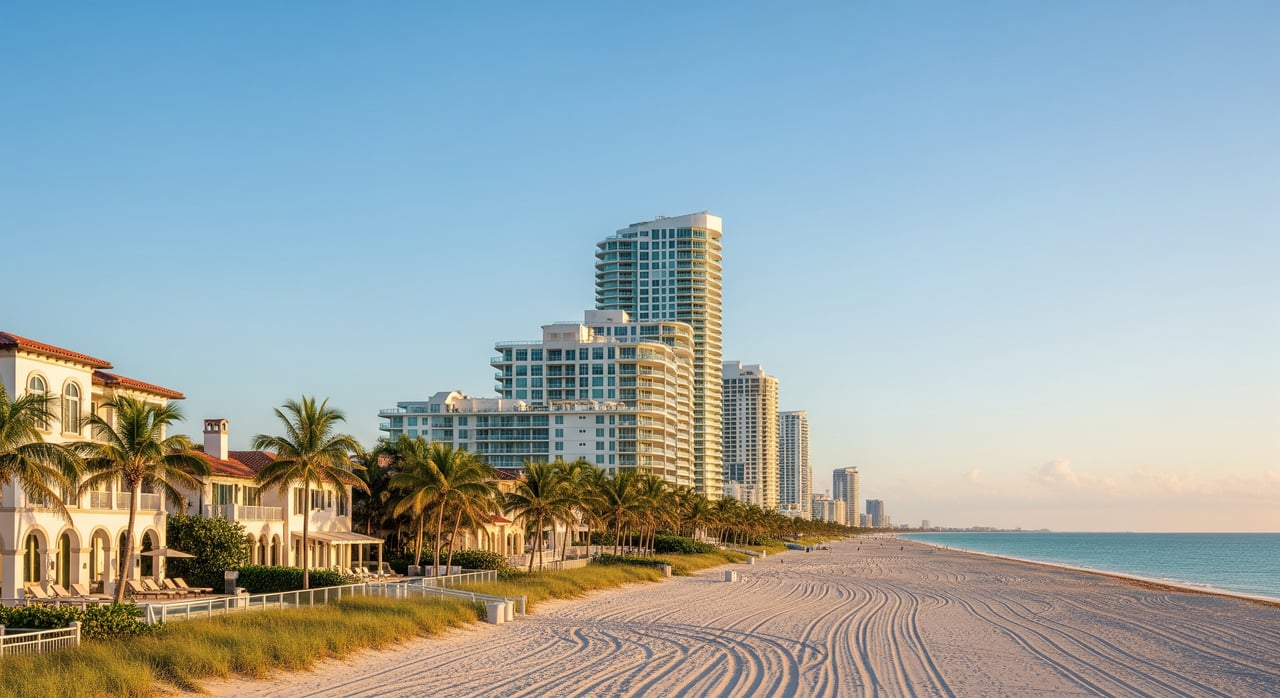
Trying to decide between two iconic slices of Miami’s northern coastline? Surfside and Bal Harbour sit side by side, yet each offers a distinct lifestyle, real estate profile, and day-to-day rhythm. If you’re weighing a second home or seasonal residence, the differences can shape your experience and your budget.
This guide breaks down the vibe, beaches, housing types, HOA fees, rental rules, flood and insurance realities, and who each location best serves. You’ll leave with a clear framework to make a confident choice. Let’s dive in.
Where they are and how they live
Both Surfside and Bal Harbour are compact barrier-island municipalities on Miami‑Dade County’s northern Miami Beach coastline. Each sits between the Atlantic Ocean and Biscayne Bay/Intracoastal Waterway, with oceanfront living at the center.
You can reach Miami International Airport, downtown Miami, and South Beach by car, with typical drives ranging from about 20 to 40 minutes depending on traffic and time of day. Both function as dense, oceanfront residential enclaves rather than sprawling cities, which helps preserve a relaxed, coastal feel.
Lifestyle snapshot: vibe at a glance
- Bal Harbour: Polished and luxury-focused, with curated retail and resort-style amenities defining the village experience. Upscale hotel restaurants and fine dining create an elegant, low-key evening scene.
- Surfside: Calmer and more neighborhood-forward, with local restaurants, cafés, parks, and a strong small-town beach community feel. The rhythm is easygoing and residential.
Neither town is a late-night entertainment hub like South Beach. If you prefer upscale dining and shopping steps from home, Bal Harbour delivers. If you want a quieter setting with community programming and local haunts, Surfside stands out.
Beach experience and access
Both municipalities offer ocean beaches. Surfside’s shoreline is often described as less crowded with a relaxed atmosphere, while Bal Harbour’s beachfront fronts high-end hotels and luxury residences, creating a refined resort context.
Public beach access points, parking rules, lifeguard coverage, and amenities vary by municipality and can change seasonally. Before committing to a specific building or block, confirm current beach access details and any relevant permits through local parks and recreation resources.
Shopping and dining: day to night
- Bal Harbour Shops anchors the village’s identity with internationally recognized luxury retail and upscale dining. The shopping experience is a destination in itself and a major lifestyle perk for residents nearby.
- Surfside favors smaller-scale commercial corridors with local shops and neighborhood eateries. You’ll also find a notable concentration of kosher restaurants and community services, which can shape dining hours and weekly rhythms, including closures for Shabbat at some businesses.
In both towns, evenings tend to be relaxed rather than nightlife-driven. Expect refined hotel dining in Bal Harbour and cozy cafés and neighborhood restaurants in Surfside.
Real estate at a glance
- Building types: Bal Harbour features a higher concentration of luxury high-rise condominiums and full-service towers, including branded and resort-style residences. Surfside offers a mix of low- to mid-rise condos, boutique buildings, some single-family homes and townhouses, and a handful of small hotels/residences.
- Price positioning: Bal Harbour generally commands premium pricing tied to luxury retail adjacency, high-end amenities, and brand-name developments. Surfside spans a wider range, with more accessible entry points in smaller or older buildings and top-tier prices for newer or oceanfront units.
HOA fees and services
Expect higher monthly maintenance/HOA fees where services and amenities are most robust. Full-service towers in Bal Harbour with concierge, valet, and resort amenities typically carry larger monthly fees than smaller, lower-amenity buildings common in Surfside. Always compare what each fee includes and how it aligns with your lifestyle.
Building age, safety, and due diligence
Both towns include buildings from mid‑20th century construction through modern glass towers. Building age influences maintenance needs, reserve requirements, and insurance.
After the 2021 condominium collapse in Surfside, state and local attention to structural inspections, maintenance reserves, and building‑safety regulations increased. If you are considering a condo, take a thorough approach: review recent inspection results and engineering reports, reserve studies, governing documents, budgets, meeting minutes for special assessments, and any compliance actions tied to post‑2021 reforms.
Rentals and use: what to know
Short‑term rental rules differ by municipality and by building. Many luxury buildings in Bal Harbour restrict short‑term rentals, while Surfside buildings vary widely. If rental income is part of your plan, verify local ordinances, building policies, and licensing requirements before you shortlist properties. A building’s house rules and the municipality’s code are both decisive.
Flood, insurance, and climate considerations
These coastal communities sit in flood‑prone zones, and flood insurance is commonly required by lenders. Rates depend on factors like elevation, construction type, and specific flood-zone designations. Beyond insurance, consider long-term resilience: sea‑level rise, occasional king‑tide flooding, and storm intensity trends are part of coastal ownership.
Request elevation certificates, understand how your building is tied down and protected, and review available resilience or adaptation plans at the municipal or county level. Budget realistically for property and flood insurance alongside HOA fees and property taxes.
Transportation and parking
Street parking rules, building garage allocations, and guest parking policies differ across buildings and blocks. Bal Harbour’s shopping traffic can increase congestion during peak retail periods, while Surfside’s neighborhood streets may have localized parking controls. Ask specific questions about assigned spaces, EV charging, and guest passes when comparing buildings.
Who each locale best suits
- Best fit for Bal Harbour: You want a luxury, high‑service environment with brand-name developments and direct access to world‑class retail and upscale dining. You are comfortable with premium price points and higher HOAs in exchange for resort-level amenities and a polished village atmosphere.
- Best fit for Surfside: You prefer a quieter oceanfront setting with a neighborhood feel and varied building options. You value local restaurants and small shops, and you want a range of price points while staying close to the amenities of Bal Harbour and Aventura.
Real‑world buyer scenarios
- Lock‑and‑leave luxury owner: If you want concierge services, valet, full amenities, and refined dining at your doorstep, focus on Bal Harbour’s full‑service towers.
- Lifestyle buyer seeking variety: If you want options from boutique mid‑rises to newer oceanfront condos, and you like a calmer street scene, Surfside is a smart place to explore.
- Rental‑minded buyer: Either town might work, but rules vary by building. Start by filtering for properties whose condominium documents and municipal codes align with your rental plans.
A simple decision checklist
Use this quick framework to compare your short list:
- Define your lifestyle priorities.
- Do you want curated luxury and on‑site services, or a neighborhood vibe and local cafés?
- Set your amenity and fee tolerance.
- Match the level of building services you’ll use with monthly HOA costs you’re comfortable carrying.
- Clarify your use plan.
- Seasonal owner‑use only, or will you seek rental income? Confirm municipal and building rules early.
- Assess building age and safety.
- Request recent engineering reports, reserve studies, and any post‑2021 compliance records.
- Model total carrying costs.
- Include taxes, HOA/maintenance, property and flood insurance, utilities, and potential special assessments.
- Understand flood risk.
- Review flood maps, elevation certificates, and mitigation features; compare insurance estimates by building.
- Test the lifestyle.
- Visit on weekday vs. weekend and high vs. low season to check beach activity, traffic, and noise.
- Confirm practicalities.
- Parking assignments, EV charging, guest parking, property management options, and nearby services.
Make your move with confidence
Choosing between Surfside and Bal Harbour comes down to how you want to live and what you value in a coastal home. Both offer prized oceanfront settings, but the day‑to‑day experience, building styles, rules, and costs can differ meaningfully.
If you want seasoned local guidance on buildings, HOA budgets, inspection histories, insurance expectations, and lifestyle fit, connect with the Surfside‑based team at the Coltrane Miami Group. You’ll get development‑grade advisory with boutique, concierge service as you compare properties and schedule private showings.
FAQs
What’s the main lifestyle difference between Surfside and Bal Harbour?
- Bal Harbour is more luxury- and retail‑oriented with resort-style services, while Surfside leans residential and neighborhood‑focused with a calmer beach feel.
Are HOA fees typically higher in Bal Harbour than Surfside?
- Full‑service, amenity-rich towers common in Bal Harbour often carry higher monthly fees than smaller or lower‑amenity buildings frequently found in Surfside.
How long is the drive to Miami International Airport from these towns?
- Typical drives range from about 20 to 40 minutes depending on traffic, time of day, and route.
Can I do short‑term rentals in Surfside or Bal Harbour?
- Rules vary by municipality and building; many luxury buildings restrict short‑term rentals, so confirm condo documents and local ordinances before buying.
Are Surfside beaches less crowded than Bal Harbour’s?
- Surfside’s beach experience is often described as quieter and less crowded, while Bal Harbour’s beachfront fronts luxury hotels and residences with a resort context.
What condo due diligence should I complete before buying?
- Review governing documents, budgets, reserve studies, inspection and engineering reports, special‑assessment history, and any post‑2021 compliance records.
Do I need flood insurance for a condo here?
- These coastal areas are in flood-prone zones; lenders commonly require flood insurance, and it is often advisable even when not mandated.