If you are looking at Miami Beach condos and wondering where value, lifestyle, and long-term upside still intersect, North Beach deserves a closer look. This is not a one-note condo market, and that is exactly why buyers and investors keep coming back to it. In this guide, you will see how North Beach is changing, what current pricing really tells you, and where smart due diligence matters most before you buy. Let’s dive in.
Why North Beach Stands Out
North Beach is the northern end of Miami Beach, but it behaves like its own micro-market. The City of Miami Beach’s North Beach Community Redevelopment Agency defines a 326.4-acre redevelopment area roughly bounded by 87th Terrace, the Atlantic Ocean, 65th Street, and Rue Notre Dame.
That matters because public planning in North Beach is focused on very specific issues, including climate resiliency, economic development, affordable housing, historic preservation, and land development regulation. City materials also point to commercial vacancies, limited housing stock, and resiliency challenges, which helps explain why the market feels dynamic rather than fully built out.
For you as a buyer or investor, that means North Beach is not just a place to shop for condos. It is an area where public investment, redevelopment pressure, and preservation rules are all shaping the next chapter of the neighborhood.
North Beach Lifestyle Appeal
A big part of North Beach’s draw comes from public spaces and everyday livability. Ocean Terrace Park has reopened as a 5-acre oceanfront park between 73rd and 75th streets, while North Beach Oceanside Park spans nearly 28 acres between 79th and 87th streets.
The neighborhood also benefits from the Miami Beach Bandshell, which hosts year-round programming, and the planned 72 Street Community Complex, which is expected to add recreation, a pool, pickleball, a library, retail, and parking. Miami Beach’s trolley system also helps connect North Beach with the rest of the city.
When you compare North Beach with denser, more nightlife-focused parts of Miami Beach, this difference stands out. North Beach often feels more residential, more grounded in public space, and easier to picture as a long-term second-home or full-time lifestyle choice.
North Beach Condo Prices Are Highly Segmented
One of the biggest mistakes buyers make is treating North Beach like it has one typical price point. It does not. The numbers show a market with a wide range of entry points, and building type matters just as much as address.
Current portal data suggests a broad active market. Realtor.com shows 594 listings, a median asking price of $650,000, a median price per square foot of $620, a median 107 days on market, and a sale-to-list ratio of 94%.
That snapshot is helpful, but asking-price data only tells part of the story. Closed-sale reporting from recent MLS-based market reports shows how wide the condo spread really is.
In Q4 2025, North Beach unit medians were reported at about:
- $145,000 for studios
- $324,500 for one-bedrooms
- $675,000 for two-bedrooms
- $980,000 for three-bedrooms
In Q1 2026, those medians shifted to roughly:
- $164,000 for studios
- $270,750 for one-bedrooms
- $700,000 for two-bedrooms
- $1.365 million for three-bedrooms
The takeaway is simple. North Beach includes both entry-level condos and higher-end product, so your strategy should focus on specific building classes and unit types rather than broad neighborhood averages.
How North Beach Compares With South Beach
For buyers who want the Miami Beach name but are still weighing value, North Beach compares well against more expensive submarkets. In the combined Mid/North Beach luxury condo segment, pricing reached $1,107 per square foot with 93 days on market in Q3 2025.
By comparison, South Beach luxury condos traded at $1,538 per square foot with 80 days on market. Miami Beach overall luxury condos were at $1,292 per square foot and 98 days on market.
That does not mean North Beach is inexpensive. It does mean you may find a lower-cost luxury alternative to South Beach while staying within the broader Miami Beach market. For many second-home buyers and investors, that pricing gap is where North Beach becomes compelling.
Condo Product Types in North Beach
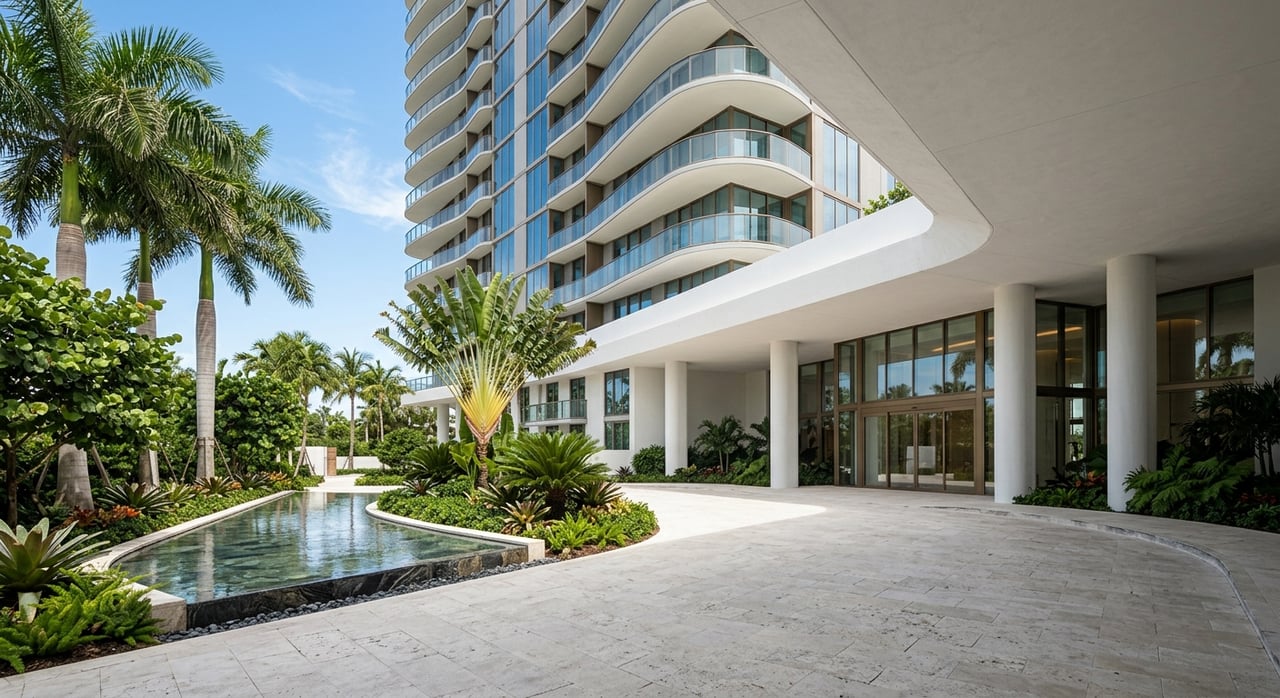
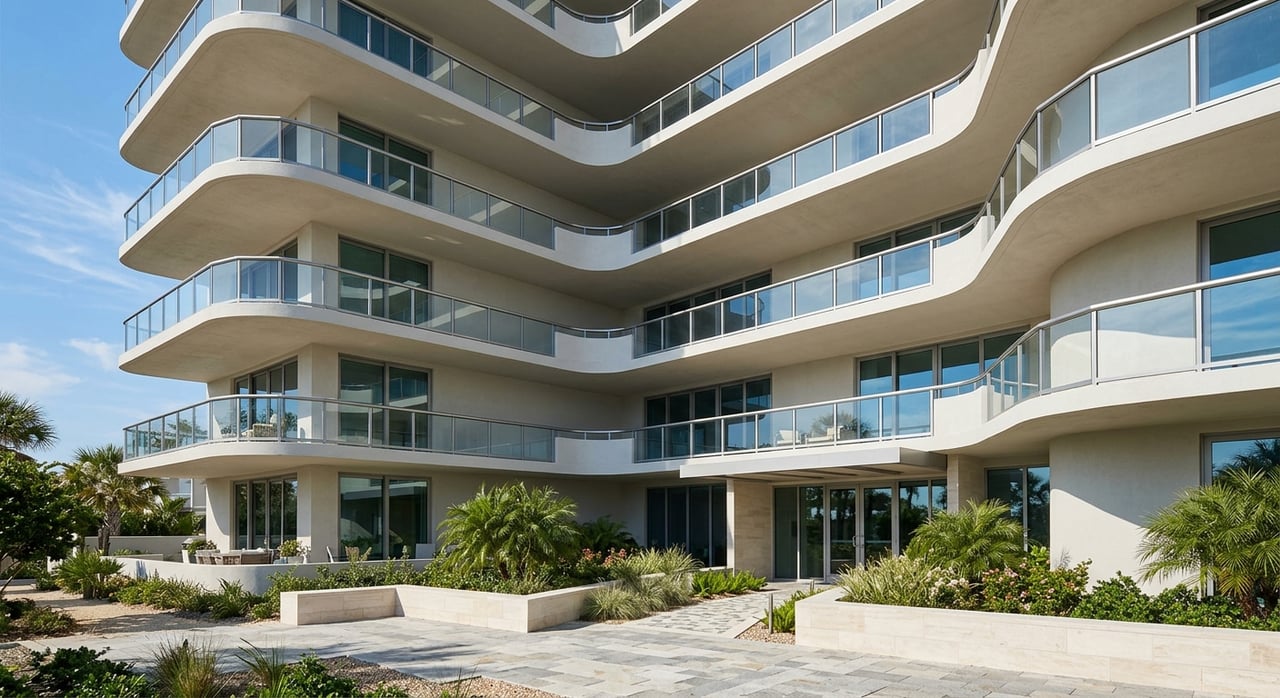
North Beach is best understood as several condo markets under one neighborhood name. On one side, you have newer towers and recent development with stronger amenity packages and a more full-service experience.
Recent reporting has highlighted newer projects such as NoBe PARC, 72 Park, and 72 Carlyle as part of North Beach’s new-construction wave. Amenity packages in this category may include resort-style pools, coworking spaces, social lounges, fitness and wellness spaces, valet, and concierge services.
On the other side, you have older buildings that often compete on location, beach access, views, and relative value. These properties may offer attractive pricing, but they usually need a more careful review of reserves, budgets, and future capital needs.
For many buyers, the right choice comes down to priorities:
- Newer buildings may appeal if you want convenience, more amenities, and a more turnkey ownership experience.
- Older buildings may appeal if you want a lower price point, a specific location, or a value-oriented play with upside.
- Preservation-sensitive properties may require more patience and diligence if future renovations or exterior changes are important to you.
Historic Preservation Matters Here
North Beach has a more preservation-sensitive identity than many buyers expect. The City of Miami Beach Historic Preservation Board has authority over alterations and demolitions in designated historic districts, and the city’s archive specifically lists North Beach historic resources and districts.
This matters because older, lower-scale buildings are part of the area’s character and part of its inventory. If you are buying in one of these buildings, plans for exterior work, major renovations, or redevelopment may involve added review.
That does not make these properties less attractive. It simply means your purchase decision should account for the building’s physical condition, governance, and realistic path for future improvements.
Why Investors Keep Watching North Beach
North Beach is not only a lifestyle market. It also sits within one of the strongest vacation-home ecosystems in Florida.
Miami Realtors reported that Miami Beach is the No. 2 largest vacation-home market in the United States, with 13,817 vacation homes representing 22% of housing stock. The same source reported that 76% of condo and townhome sales in South Florida vacation-home markets were all-cash in 2025.
For investors, those numbers support a few important conclusions:
- Miami Beach remains deeply relevant to second-home demand.
- Cash buyers are a major force in the broader market.
- North Beach benefits from that demand while offering a different price profile than some better-known luxury areas.
If you are buying with an investment mindset, this does not remove the need for discipline. It just confirms that North Beach participates in a larger, active ecosystem of second-home and cash-driven condo demand.
Florida Condo Diligence Is Essential
In North Beach, the neighborhood story matters, but the building story matters more. Florida condo diligence now centers heavily on structural safety, reserves, and long-term repair planning.
State law requires milestone inspections for condo and co-op buildings that are three stories or higher by December 31 of the year the building turns 30, and every 10 years after that. Florida law also requires a Structural Integrity Reserve Study, or SIRS, every 10 years for buildings that are three habitable stories or higher.
The SIRS must cover major components including:
- Roof
- Structure
- Fireproofing and fire protection systems
- Plumbing
- Electrical systems
- Waterproofing and exterior painting
- Windows and exterior doors
- Other qualifying items that affect those components
For budgets adopted on or after December 31, 2024, associations that must obtain a SIRS may not waive or underfund reserves for those statutory items. That makes reserve planning much more important when you are reviewing a building’s financial health.
What Buyers Should Request From Associations
The Florida Department of Business and Professional Regulation says structural inspection reports and reserve studies are part of an association’s official records and must be provided to potential purchasers. In practical terms, you should ask for much more than just condo rules and current dues.
A smart North Beach condo review should include:
- The latest milestone inspection summary
- The most recent SIRS
- Current reserve balances
- Special assessment history
- Insurance information
- Any approved loan or line of credit used for repairs or reserves
- Recent budgets and operating financials
In many cases, the strongest buying opportunity is not the unit with the lowest asking price. It is the building with disciplined reserves, a realistic operating budget, and a clear capital plan.
What This Means for Buyers
If you are buying for your own use, North Beach offers something increasingly rare in Miami Beach. You can still find beach access, public green space, a more residential setting, and a wide span of condo price points within one neighborhood.
Your best move is to decide early what matters most to you. That may be newer amenities, lower entry cost, stronger walkability to parks and oceanfront spaces, or confidence in the association’s financial position.
In a market like North Beach, lifestyle fit and building quality need to work together. A beautiful location alone is not enough if the association has unresolved structural or reserve issues.
What This Means for Investors
If you are approaching North Beach as an investor, the case is nuanced but attractive. The area benefits from Miami Beach’s strong second-home demand, visible public investment, and a pricing profile that can look more accessible than South Beach at the luxury end.
At the same time, your underwriting needs to go deeper than neighborhood momentum. Building age, reserve requirements, inspection status, special assessments, and the quality of the association all have a direct impact on your risk and future costs.
In other words, North Beach can offer opportunity, but it rewards selectivity. The strongest plays are often found where pricing, physical condition, and association health align.
If you want experienced guidance on evaluating North Beach condos, from newer towers to older ocean-adjacent buildings, Coltrane Miami Group offers high-touch local insight backed by deep Miami Beach market knowledge.
FAQs
What makes the North Beach Miami condo market different from other Miami Beach areas?
- North Beach stands out for its more residential feel, active public-space improvements, wide range of condo price points, and a mix of newer towers and older preservation-sensitive buildings.
Are North Beach Miami condos generally more affordable than South Beach condos?
- In the luxury segment, Mid/North Beach reported $1,107 per square foot in Q3 2025 compared with $1,538 per square foot in South Beach, which suggests North Beach can offer a lower-cost luxury alternative.
What should buyers review before purchasing a North Beach Miami condo?
- Buyers should request the latest milestone inspection summary, the most recent SIRS, reserve balances, special assessment history, insurance information, and any association borrowing tied to repairs or reserves.
Are older North Beach Miami condo buildings riskier to buy?
- Not necessarily, but older buildings usually require closer review of reserves, budgets, capital plans, and any historic-preservation constraints that may affect repairs or alterations.
Is North Beach Miami a good area for condo investors?
- North Beach may appeal to investors because it sits within Miami Beach’s strong vacation-home market, but the quality of the opportunity often depends on the building’s association health and long-term capital needs.